

While the basic purpose—identifying and directing occupants—remains the same, the variety of room signages now found in hotels, offices, hospitals, schools, and government offices reflects a mix of international standards, local regulations, and cultural sensibilities.
Identification & Way‑finding signs – The most ubiquitous are the door‑hanger or plaque that displays a room number or name. In the hospitality sector, these are often crafted from acrylic or brushed aluminum, featuring the hotel’s logo and a clean sans‑serif font. Schools and hospitals tend to use more durable materials such as PVC‑foam board or metal, with high‑contrast lettering to aid quick recognition for patients and visitors. Because many Filipinos are bilingual, signage is frequently printed in both English and Filipino (e.g., “Room 210 – Silid 210”).
Regulatory & Safety signs – The Bureau of Fire Protection (BFP) and the Department of Health prescribe specific designs for emergency exits, fire‑extinguishers, and isolation rooms. These signs must meet the Philippine National Standards (PNS) for color (red for fire equipment, green for first‑aid), shape, and pictograms, and they are usually made from fire‑retardant aluminum or high‑visibility vinyl that can withstand humidity and heat.
Functional & Service signs – Offices often install “Do Not Disturb,” “Occupied/Available,” or “Conference in Session” indicators on doors, using magnetic or flip‑type cards that can be changed throughout the day. In hospitals, “Isolation,” “ICU,” and “Maternity” signs are integrated with RFID tags or QR codes that link to patient information systems for quick staff access while preserving privacy.
Identification & Way‑finding signs – The most ubiquitous are the door‑hanger or plaque that displays a room number or name. In the hospitality sector, these are often crafted from acrylic or brushed aluminum, featuring the hotel’s logo and a clean sans‑serif font. Schools and hospitals tend to use more durable materials such as PVC‑foam board or metal, with high‑contrast lettering to aid quick recognition for patients and visitors. Because many Filipinos are bilingual, signage is frequently printed in both English and Filipino (e.g., “Room 210 – Silid 210”).
Regulatory & Safety signs – The Bureau of Fire Protection (BFP) and the Department of Health prescribe specific designs for emergency exits, fire‑extinguishers, and isolation rooms. These signs must meet the Philippine National Standards (PNS) for color (red for fire equipment, green for first‑aid), shape, and pictograms, and they are usually made from fire‑retardant aluminum or high‑visibility vinyl that can withstand humidity and heat.
Functional & Service signs – Offices often install “Do Not Disturb,” “Occupied/Available,” or “Conference in Session” indicators on doors, using magnetic or flip‑type cards that can be changed throughout the day. In hospitals, “Isolation,” “ICU,” and “Maternity” signs are integrated with RFID tags or QR codes that link to patient information systems for quick staff access while preserving privacy.


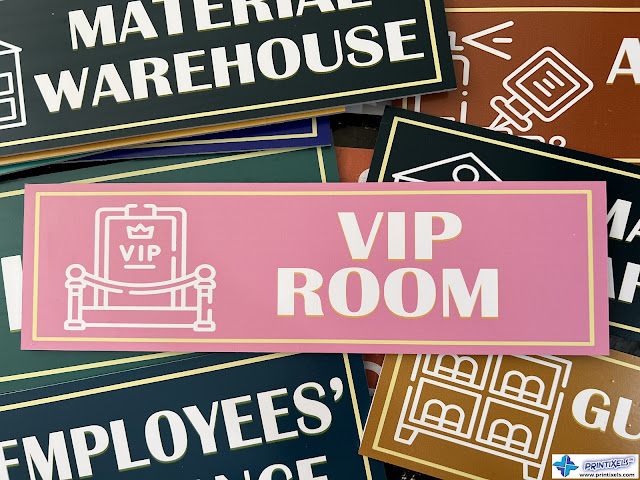
Culturally‑inspired signage – To reflect local identity, designers often weave traditional Filipino motifs—such as the baybayin script, sun and stars from the flag, or indigenous weaving patterns—into the background of a sign. Such touches are common in boutique hotels in Cebu or heritage schools in Vigan, where the signage doubles as a subtle brand story.
Material considerations for the tropics – The Philippines’ tropical climate dictates the use of moisture‑resistant substrates. Acrylic, polycarbonate, and marine‑grade aluminum resist warping and fading under high humidity, while UV‑coated vinyl protects outdoor way‑finding signs from intense sunlight. In coastal resorts, stainless steel or brass with anti‑corrosion coatings is preferred to maintain a polished look despite the salty air.
Compliance and installation – Regardless of style, all room signs must be securely mounted at a height of 1.2–1.5 m from the floor, as stipulated by the National Building Code. For accessibility, the Department of Human Rights and Equality (DHRE) recommends tactile lettering or Braille inserts for rooms used by persons with disabilities.
In summary, room signage in the Philippines ranges from the straightforward “Room 101” plaque to high‑tech interactive displays, each tailored to the building’s function, regulatory demands, and cultural context. Whether crafted from acrylic in a Manila hotel lobby or etched in brass for a heritage school, these signs serve as silent yet essential guides, marrying safety, efficiency, and a touch of Filipino pride.
Related Product:


0 Comments:
Post a Comment