Showing posts with label Stickers. Show all posts

Vehicle Stickers: Turning Your Ride Into A Statement

Printixels Enterprise
Vehicle Stickers: Turning Your Ride Into A Statement

The Philippines’ tropical climate, bustling streets, and vibrant culture call for vehicle stickers that can survive relentless sunshine, sudden downpours, and the occasional splash of sea spray while still looking sharp.

Vinyl weather‑proof decals are the go‑to choice: they’re UV‑resistant, waterproof, and flexible enough to cling to curved surfaces such as bumper guards or side mirrors. High‑gloss finishes reflect the sun’s glare, making the graphics pop, while matte‑laminated versions reduce glare for a more subtle, upscale look. 

For drivers who need extra visibility at night—especially in provincial roads and busy Manila traffic—reflective micro‑prismatic stickers provide a safety boost. These stickers bounce light back to its source, turning logos or safety messages into bright beacons when headlights sweep over them.

Cultural pride is another strong driver of sticker trends. Pinoy‑themed designs—from the iconic jeepney graphic, the “Pilipinas” script, to regional flora like the sampaguita or narra—allow owners to showcase their heritage. 

Because many Filipino drivers customize their rides with multiple layers, transparent‑backed vinyl is popular: it lets the vehicle’s paint show through while adding color and detail, reducing the risk of an ugly “bubble” effect when the sticker ages. Heat‑transfer vinyl (HTV) is ideal for cloth interiors such as seat covers or floor mats, offering bold, washable graphics that endure high cabin temperatures without cracking.


Practicality matters just as much as aesthetics. Safety and regulatory stickers—such as the Department of Transportation’s emission‐test stickers, registration plates, and anti‑theft QR codes—must be made from durable, tamper‑evident material that won’t peel off during rainy season. 

Many shops now offer laminated, anti‑scratch laminates that protect these essential labels from fading or being defaced. For fleet owners, fleet‑identification stickers made from heavy‑duty polyester provide a professional look while resisting oil, gasoline, and road salt.

Finally, the rise of customizable digital printing allows owners to upload their own artwork, family photos, or business logos, turning any vehicle into a moving billboard. When paired with a high‑quality adhesive that retains its bond in temperatures ranging from 20 °C to 38 °C, these personalized stickers stay vibrant for years. 

Whether you’re cruising along EDSA, navigating the mountain roads of Baguio, or heading to a beach in Palawan, the right sticker not only personalizes your ride but also protects it against the Philippines’ unique weather challenges—making every journey both stylish and safe.

Related Product:
Customized Vehicle Stickers & Decals

Functional Benefits Of Glow in the Dark Stickers

Printixels Enterprise
Functional Benefits Of Glow in the Dark Stickers

In recent years, glow in the dark stickers have moved from novelty items to an increasingly common component of the Philippines’ public‑safety toolkit.

By absorbing ambient light during the day and emitting a steady, visible glow after dark, these low‑cost stickers are being applied to a wide range of high‑risk environments—emergency‑exit doors in schools and hospitals, stair‑railings in multistory residential buildings, road‑signs along provincial highways, and even the hulls of fishing vessels that operate after sunset.

The visual cue they provide is especially valuable in a tropical archipelago where power outages are frequent, monsoon‑induced flooding can plunge entire neighborhoods into darkness, and the country’s densely populated urban centers often struggle with inadequate street lighting. When placed strategically, the stickers act as passive way‑finding aids, reducing the likelihood of falls, collisions, and panic‑induced injuries during low‑visibility conditions.

The safety function of these glow in the dark stickers rests on both their photoluminescent chemistry and the regulatory framework that governs their use. Most commercially available products in the Philippines now employ zinc‑sulphide or strontium‑aluminate phosphors—materials that are non‑toxic, free of heavy metals such as lead and cadmium, and compliant with the Department of Health’s (DOH) and Food and Drug Administration (FDA) standards for consumer safety.

The Department of Labor and Employment (DOLE), together with the National Building Code (NBC), has issued guidelines that require luminous markings on emergency egress routes in public buildings exceeding 300 sqm, and many local government units (LGUs) have incorporated these stipulations into their fire‑safety ordinances. Compliance is verified through routine inspections, and non‑conforming stickers—especially those imported without proper certification—are subject to seizure under the Customs Tariff and Import Regulations.


Beyond regulatory compliance, the functional benefits of glow‑in‑the‑dark stickers have been documented in several pilot studies carried out by Philippine universities and disaster‑risk agencies. A 2023 field trial conducted by the University of the Philippines Manila in three high‑school campuses showed a 38 % reduction in stair‑related injuries during night‑time drills when the steps were marked with high‑intensity stickers versus untreated steps. 

Similarly, the National Disaster Risk Reduction and Management Council (NDRRMC) reported that communities equipped with glow‑in‑the‑dark signage on evacuation routes experienced faster, more orderly evacuations during Typhoon Dante (2024). These outcomes underscore the luminous stickers’ role not merely as decorative lighting but as a cost‑effective, low‑maintenance layer of passive safety that can function even when power supplies are compromised.

Nevertheless, challenges remain. The durability of the photoluminescent coating can degrade after prolonged exposure to UV radiation, rain, and high humidity—common conditions in the Philippines’ climate. To address this, manufacturers are now producing stickers with waterproof, UV‑stabilized encapsulation, and the DOH recommends a re‑charging schedule of 15–30 minutes of direct sunlight every two weeks to maintain optimal brightness.

Additionally, public awareness campaigns are needed to educate building owners and facility managers about proper installation height, spacing, and the importance of pairing stickers with other safety measures such as tactile flooring and audible alarms.

As the country continues to confront urbanization pressures and climate‑related hazards, glow‑in‑the‑dark stickers stand out as an affordable, easily deployable safety solution—one that shines brightest when darkness threatens to obscure the path to safety.

Related Service:

Reflective Stickers: Critical Role in Safety & Visibility

Printixels Enterprise
Reflective Stickers: Critical Role in Safety & Visibility

In the bustling streets and dimly lit provincial roads of the Philippines, reflective stickers - often called reflectorized stickers - play a critical, albeit sometimes understated, role in safety and visibility.

These seemingly simple pieces of adhesive material, engineered with microscopic glass beads or prisms, possess the remarkable ability to bounce light back to its source, making objects and people easily noticeable, particularly at night or in low-light conditions. Their prevalence across the archipelago speaks to their effectiveness and affordability, firmly establishing them as essential tools for various applications.

One of the most common uses of reflective stickers is on vehicles. From jeepneys and tricycles to private cars and motorcycles, these stickers are strategically placed on bumpers, side panels, and helmets. This is often a requirement mandated by local transport regulations, designed to reduce accidents by enhancing the visibility of vehicles, especially to other motorists and pedestrians. The vibrant red, white, and yellow strips have become a familiar sight, a visual cue reminding everyone to be aware of their surroundings. 

Beyond vehicles, reflective stickers are also crucial for pedestrian safety. They are frequently seen on school bags, clothing, and even footwear, providing a lifeline to those walking or cycling along dimly lit roads before dawn or after dusk. Construction sites and road work also rely heavily on these stickers, applying them to barricades, cones, and equipment to prevent accidents and guide traffic safely.

The economic benefits of reflectorized stickers are equally noteworthy. Affordability is a major factor in their widespread adoption. The cost of these stickers varies depending on size, quality, and the quantity purchased. For small-scale, personal use, such as adding stickers to a bicycle or backpack, they can be bought individually for a few pesos from local markets or hardware stores.


Larger rolls or sheets, suitable for vehicles or industrial applications, can be found at automotive supply shops and printing businesses at costs ranging from a few hundred to a few thousand pesos. While premium, higher-grade reflective films offering enhanced reflectivity and durability command higher prices, the common varieties are relatively inexpensive, making them accessible to a broad spectrum of the population, including budget-conscious individuals and small businesses.

Moreover, the ease of application contributes to their widespread use. Many reflectorized stickers come with a simple peel-and-stick backing, allowing for quick and hassle-free installation. This practicality has made them a favored choice for both informal and formal applications. From personal customizations on bicycles to large-scale traffic management systems, reflective stickers provide a straightforward and effective solution.

In conclusion, reflective stickers or reflectorized stickers are not merely decorative accessories in the Philippines; they are indispensable tools that contribute significantly to safety on roads, workplaces, and public spaces. Their affordability, ease of application, and undeniable effectiveness have solidified their position as a critical component of the country's safety infrastructure. 

From the smallest tricycle to the largest construction project, these unassuming pieces of reflective material help to illuminate safety and ensure a more secure environment for everyone. As awareness of their benefits grows, and as advancements in materials science lead to even more effective and durable options, the role of reflective stickers in the Philippines is only set to become even more crucial in the years to come.

Related Product:

Choosing The Right Sticker Label Printing Service in the Philippines

Printixels Enterprise
Choosing The Right Sticker Label Printing Service in the Philippines

Choosing the right sticker label printing service in the Philippines can feel like navigating a bustling market—there are countless stalls, each promising the perfect product, but only a few truly deliver on quality, speed, and value. 

The first step is to assess print quality and material options. Look for providers that offer high‑resolution digital or offset printing, UV‑cured inks, and a variety of substrates such as matte, glossy, clear vinyl, or waterproof polyester—essential for everything from food‑grade labels to outdoor signage. Request a sample pack; the tactile feel, colour fidelity, and edge‑to‑edge consistency will quickly reveal whether a printer meets professional standards.

Next, consider customization flexibility and turnaround time. The best Filipino printers have online design portals that let you upload artwork, apply dielines, and preview proofs in real time, while also supporting low‑run orders (as few as 50 labels) for startups and large bulk jobs for established brands. Fast turnarounds—often within 48 hours for standard jobs—are increasingly common in Metro Manila and Cebu hubs, but always confirm whether the quoted speed includes proof approval, cutting, and shipping.

Pricing transparency is another decisive factor. Reputable sticker printing shops break down costs by size, material, finish, and quantity, and they typically offer volume discounts without hidden surcharges for colour separations or file revisions. Compare at least three quotes, but weigh them against the quality of the sample and the reliability of the service.


Don’t overlook customer support and after‑sales service. A responsive team that can guide you through colour management, regulatory compliance, and any post‑print adjustments will save you headaches later. Reading online reviews on platforms like Facebook, Google Business, and local forums such as PinoyDeal or Reddit’s r/Philippines can provide real‑world insights into punctuality, packaging safety, and how the printer handles complaints.

Finally, think about sustainability and local logistics. Companies that source eco‑friendly inks, recyclable or biodegradable label stock, and operate carbon‑offset shipping routes align with the growing consumer demand for greener packaging. Choosing a printer with a nearby warehouse—whether in Quezon City, Makati, or Davao—reduces freight costs and delivery times, especially for time‑sensitive campaigns.

By scrutinizing these key dimensions—print quality, customisation, cost clarity, support, and sustainability—you can confidently select a sticker label printing partner in the Philippines that not only meets your design vision but also scales with your business’s growth.


Related Product:

Vinyl Sticker Labels

Printixels Enterprise
Vinyl Sticker Labels Philippines

Make your products stand out from the crowd with our custom vinyl sticker labels, which offer the perfect fusion of durability, aesthetic appeal, and professional polish.  

Here at Printixels, we understand that first impressions are everything in a very competitive Philippine market. Whether you are a budding entrepreneur launching a product line, a coffee shop owner crafting artisanal blends, or a corporate entity looking to streamline inventory, your branding is the silent ambassador of your business.

We offer a versatile range of customized vinyl sticker labels to suit your brand’s personality. Choose our glossy vinyl for a vibrant, high-shine look that makes colors pop, perfect for food packaging and cosmetic jars. Opt for our matte vinyl for a sophisticated, tactile, and non-glare finish that exudes luxury. For those seeking extra protection, our laminated options provide an additional barrier against scratching and chemical spills, ensuring your label remains pristine from the moment it leaves your facility. Transparent or clear vinyl stickers are also available as an option for your product labeling needs.

The Philippine climate is notoriously challenging for adhesive products—the high humidity and intense tropical heat can cause inferior paper-based stickers to peel, fade, or turn yellow within days. Our vinyl sticker labels are engineered specifically to combat these environmental stressors. Crafted from high-grade, premium vinyl, these labels are inherently waterproof and tear-proof.


Key Features Of Our Vinyl Sticker Labels:

• Full color, high definition graphics
• Waterproof, durable, and tear-proof
• Available in custom shapes and sizes
• Options: glossy, matte, clear or transparent
Die-Cut Vinyl Stickers for Global 3D Systems    Oval Vinyl Sticker Labels - Cookie Coma Vinyl Sticker Labels - Rublet Purified Drinking Water  Label Stickers - FCSC Ice and Water Station 

The versatility of our vinyl stickers and decals knows no bounds. They are the ideal choice for businesses in Metro Manila, Cavite, Laguna, and Batangas, Philippines looking to professionalize their packaging. Use them to seal custom poly mailers, wrap around artisanal soap boxes, or identify jars of homemade preserves. Beyond retail, they serve as excellent marketing tools—distributed as high-quality brand decals at trade shows, used for intricate equipment labeling in warehouses, or applied as decorative elements for event giveaways and personalized gifts. With our precision sticker cutting technology, we can shape your stickers into any custom silhouette, from classic circles and ovals to complex, brand-defining shapes that mirror your logo.

Our company understands that as a business owner in the Philippines, you need a partner who values your time and budget. When you choose us, you are not just getting bespoke stickers and decals; you are getting a commitment to excellence. We know the local logistics and the standards required for the Philippine market. We offer fast turnaround times and reliable shipping across the archipelago - Luzon, Visayas, and Mindanao.

We utilize state-of-the-art digital printing equipment that deliver sharp, high-definition imagery and accurate color reproduction, ensuring your brand colors look exactly as intended. From file preparation and production to final delivery, our team at Printixels is dedicated to guiding you through every step. We offer low minimum order quantities, so that small startups and large corporations alike can access premium labeling solutions

Most importantly, while our personalized stickers offer industry-leading quality, our competitive pricing ensures that you maximize your profit margins without sacrificing the presentation of your goods.

Don’t settle for low quality stickers that easily peel or blur. Invest in our premium yet affordable vinyl sticker labels today and give your brand the professional, durable, and eye-catching identity it deserves. Contact us now to receive a custom quote and let’s bring your brand to life.

Tips to Keep Custom Sticker Costs Down in the Philippines

Printixels Enterprise
Tips to Keep Custom Sticker Costs Down in the Philippines

Creating eye‑catching stickers doesn’t have to break the budget, even in a market where import duties, shipping fees, and high‑end printing services can quickly add up.

The smartest way to keep expenses low is to start with the basics: design, material, and production method. First, keep your artwork simple and vector‑based; intricate gradients and high‑resolution images demand more ink and longer print times, which drive up prices. Use free design tools like Canva or Inkscape, or tap into the vibrant pool of Filipino graphic‑design students who often work for modest fees or portfolio‑building projects.

When it comes to material, opt for standard vinyl or paper rather than specialty finishes such as holographic or metallic laminates—these premium options can add 30‑50 % to the unit cost. If the stickers will be used indoors or for short‑term promotions, a matte or semi‑gloss finish is usually sufficient.

Bulk ordering is another powerful cost‑saver. Most local printers in Manila, Cebu, and Davao offer tiered discounts: a 5 % reduction for 500‑piece runs, 10 % for 1,000, and up to 20 % for 5,000+. Even if you don’t need that many stickers right away, consider collaborating with nearby small businesses or community groups to place a joint order; you split the inventory and the savings.


Choose local print shops over overseas vendors. Many Filipino sticker printing firms have modern digital‑press equipment and can turn around orders within 48 hours, eliminating costly freight and customs fees. When you do need a specialty service (e.g., die‑cut shapes), request a proof‑run of 20–30 pieces first—this helps you catch design or sizing errors before committing to a full batch.

If you have the time and a modest upfront budget, a DIY approach can be remarkably inexpensive. Purchase a small desktop cutter (e.g., Silhouette or Cricut) and a roll of adhesive vinyl from local hardware stores (often priced at ₱150–₱250 per meter). Print your designs on a regular inkjet or laser printer, laminate them for durability, and cut them at home. Even a modest home setup can produce 100–200 high‑quality stickers for under ₱500 total.

Lastly, reuse and recycle. Keep any leftover sheets or partially printed rolls; many printers will let you carry them over to the next order at no extra charge. Turning “scrap” into a new design batch not only reduces waste but also slashes material costs.

By simplifying designs, selecting cost‑effective materials, leveraging bulk discounts, favoring local printers, and even exploring home‑cut options, you can keep sticker production affordable without sacrificing quality—perfect for startups, NGOs, and hobbyists navigating the Philippine market.

Related Product:
Custom Sticker Printing & Cutting

Stickers Vs. Decals: What Sets Them Apart?

Printixels Enterprise
Stickers Vs. Decals: What Sets Them Apart?

In everyday conversation the terms sticker and decal are often used interchangeably, yet in the Philippines’ vibrant graphics and advertising scene they refer to distinct products with different materials, manufacturing processes, and applications.

A customized sticker is essentially a pre‑cut piece of adhesive‑backed paper, vinyl, or polymer that is ready to peel and stick in a single step. Most stickers are printed on thin, flexible media and feature a matte or gloss finish that is best suited for short‑term or low‑traffic placements—think name‑tags, promotional giveaways, laptop skins, and the colorful “tapa” labels that adorn food stalls in Manila’s night markets. Because they are inexpensive to produce (often under ₱10 per piece for bulk orders) and can be printed on standard digital presses, stickers dominate the low‑budget promotional arena, especially among small businesses and community events.

A decal, on the other hand, denotes a more durable, often multi‑layered graphic that is transferred from a carrier sheet to a surface using a wet‑application or heat‑transfer method. Decals are typically made from thicker, UV‑resistant vinyl, polyester or even specialized polymer films that can withstand the harsh tropical climate of the Philippines—high humidity, intense sunlight, and occasional monsoon rains. 

The printing process usually involves large‑format solvent, UV, or eco‑solvent inks, followed by a protective laminate that guards against fading and peeling. This makes decals the go‑to solution for long‑term branding on vehicles, storefront windows, motorcycles, and even industrial equipment. In Metro Manila’s bustling jeepney industry, for example, full‑color vinyl decals are applied to side panels and rear windows, providing a weather‑proof canvas that can survive years of constant exposure.


From a market perspective, the Philippines’ sticker and decal sectors have evolved alongside the country’s digital sticker printing boom. Many local suppliers cater to both segments: they offer rapid‑turn sticker services for social‑media‑driven campaigns, while simultaneously providing custom‑cut, large‑format decal production for automotive and architectural clients.

Regulatory nuances also set the two apart. The Department of Trade and Industry (DTI) classifies stickers as “consumer promotional goods,” subject only to basic labeling standards. Decals, especially those used on public transport or building façades, must comply with the Land Transportation Office (LTO) and local city ordinances that regulate size, reflectivity, and placement to ensure road safety and aesthetic conformity. Failure to meet these guidelines can result in fines or removal orders, a reality that many Filipino entrepreneurs overlook when they mistakenly purchase a cheap sticker for a purpose that demands a durable decal.

In summary, while both stickers and decals share the core idea of adhesive graphics, their material resilience, application techniques, cost structures, and regulatory requirements diverge sharply in the Philippine context. 

Choosing the right product hinges on the intended lifespan, environmental exposure, and legal constraints of the project—whether you’re handing out a colorful giveaway at a barangay fiesta or branding a fleet of tricycles that will zip through the archipelago’s bustling streets for years to come.

Related Product:
Sticker Label Printing Services

Floor Stickers: Small Detail With Big Impact On Safety

Printixels Enterprise
Floor Stickers: Small Detail With Big Impact On Safety

In factories, warehouses, hospitals, and retail outlets, floor stickers serve a dual purpose: they guide traffic flow and warn of hazards that might otherwise go unnoticed on polished concrete or tiled surfaces.

In a country where the Department of Labor and Employment (DOLE) mandates compliance with the Occupational Safety and Health Standards (OSHS) — particularly Section 8, which addresses “signage and markings”—properly placed floor stickers are not merely decorative accessories but legally required safety controls.

A well‑designed floor sticker system can dramatically reduce the incidence of slips, trips, and falls, which the Philippine Center for Health Protection reports as the leading cause of workplace injuries, accounting for up to 30 % of all reported accidents. 

By demarcating pedestrian walkways, hazardous zones (such as chemical spill areas or heavy‑equipment routes), and emergency egress paths, these stickers create visual cues that are instantly recognizable, even to workers who speak different regional languages. Moreover, the use of universally understood symbols—such as the red “stop” or yellow “caution” triangles—helps bridge communication gaps in multinational or multilingual teams, a common reality in many Philippine industrial sites.

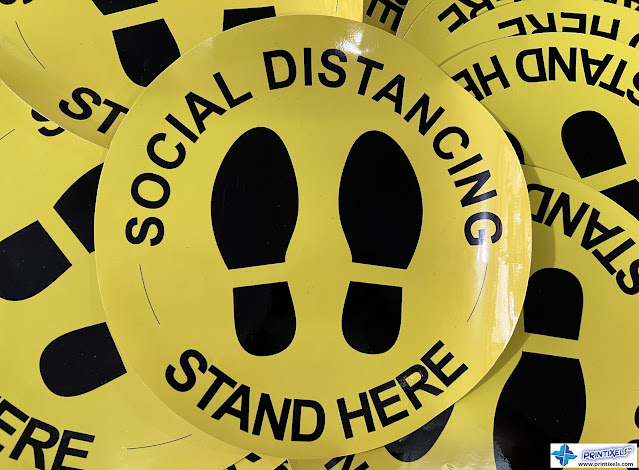
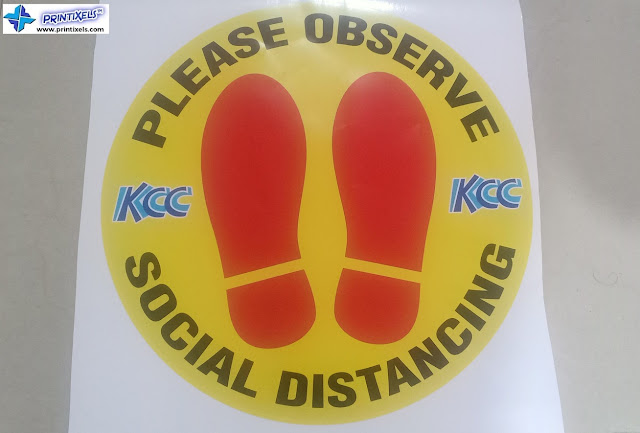
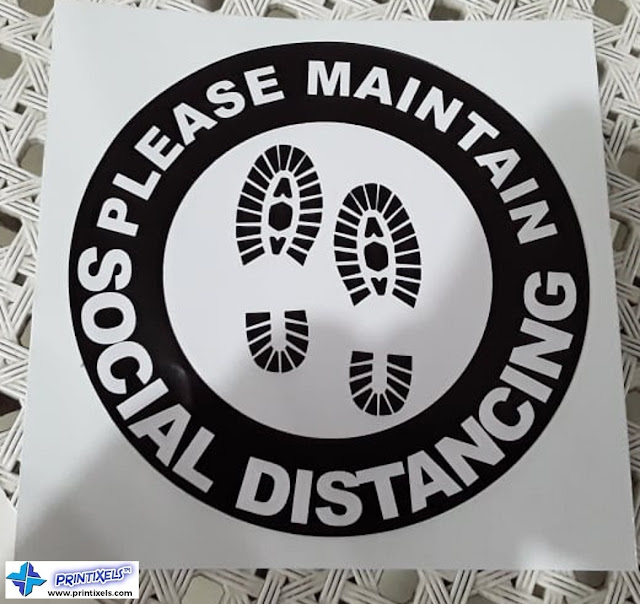
Laminated Social Distancing Floor Stickers Philippines 
Social Distancing Floor Stickers Philippines Waterproof Vinyl Social Distancing Floor Stickers

Beyond the immediate safety benefits, floor stickers contribute to operational efficiency. Clear markings reduce the time workers spend navigating cramped aisles, lower the risk of equipment collisions, and simplify compliance audits, as inspectors can readily verify that hazard zones are properly identified. For businesses, this translates into lower insurance premiums, fewer lost‑time injuries, and a stronger reputation for corporate responsibility.

True enough, floor safety stickers are more than just colorful graphics; they are a critical line of communication that translates potential hazards into instant, universally understood cues. By marking wet floors, uneven surfaces, restricted zones, or high‑traffic pathways, these stickers give employees, visitors, and patrons a clear visual warning that prompts immediate, corrective action—such as slowing down, using a handrail, or stepping aside. 

Moreover, floor stickers help organizations meet legal compliance standards, avoid costly workers’‑compensation claims, and foster a safety‑first culture that boosts morale and productivity. In environments ranging from industrial warehouses and hospitals to schools and shopping malls, the strategic placement of floor‑safety stickers turns abstract risk assessments into concrete, real‑time guidance—protecting people’s well‑being while preserving the bottom line.

As the Philippines continues its rapid industrialization, investing in high‑quality, UV‑resistant floor stickers—regularly inspected and replaced when worn—should be a top priority for any organization committed to safeguarding its workforce. 

In the grand tapestry of occupational health, these modest, adhesive signs are the threads that keep the whole picture safe, orderly, and productive.

Related Product:
Foot Markers & Floor Marking Signs & Stickers Philippines

Where To Find Custom Sticker Printers in the Philippines

Printixels Enterprise
Where To Find Custom Sticker Printers in the Philippines

Custom stickers have become a popular way for businesses, artists, and individuals in the Philippines to add a personal or professional touch to products, packaging, laptops, cars, and promotional materials. 

Nowadays, small businesses and creative industries are thriving, so finding a reliable custom sticker printer is easier than ever. Whether you’re a local entrepreneur, a student, or a hobbyist, here are key avenues to explore for unique, high-quality sticker printing services.

Online Directories and Social Media Platforms

The digital age has made it simple to discover custom sticker printers in the Philippines. A quick search on Google or Facebook Marketplace often yields local print shops offering this service. Platforms like Shopee and Lazada also list small businesses that cater to custom orders. For example, many shops frequently provide online consultations, file uploads, and home delivery. 

Additionally, Instagram is a hub for independent designers who collaborate with printers to offer bespoke sticker designs tailored to your preferences. Engaging with hashtags like #CustomStickerPH or #LocalPrintServices can connect you with emerging artists and print providers.

Local Printing Shops

For those who prefer in-person interactions, metropolitan cities like Manila, Cebu, and Davao host numerous print shops specializing in stickers. Areas such as Luzvimind (Greenhills), Eastwood City, or Bonifacio Global City (BGC) are popular for commercial and digital printing services. It’s advisable to call ahead for a portfolio review and pricing details. Word-of-mouth recommendations are invaluable here—networking with local startups, barter partnerships with friends in creative fields, or posting in community Facebook groups (e.g., Cebu Business & Trade or Manila Small Business Connect) often leads to trustworthy options.

E-commerce and Freelancer Platforms

Global platforms like Alibaba and Fiverr occasionally feature Filipino-based vendors offering remote custom sticker printing. While Alibaba is ideal for bulk orders from international suppliers, freelance designers on Upwork or Freelancer.com can create custom designs and liaise with local printers for production. For budget-friendly small-scale projects, 99designs and Behance also connect clients with Filipino graphic designers who partner with print services.


Specialty Decal and Vehicle Wrap Shops

For durable, weather-resistant stickers—ideal for car decals or outdoor signage—consider specialty shops in vehicle wrap services. Establishments like Car Detailing Shops or garage stores often offer high-performance vinyl stickers with UV protection. These can be found in areas such as SM Megamall, Makati, or Cebu Techno Park.

What to Consider When Choosing a Printer

Before finalizing, inquire about material options (vinyl, matte, glossy), size limitations, and minimum order requirements. Always request a sample of product sticker labels to assess print quality and durability. Reading online reviews or asking for client testimonials ensures reliability.

The Philippines’ growing tech-savvy and artisan community means custom stickers are more accessible and affordable than ever. By leveraging online tools, local connections, and a bit of research, you can find the perfect printer to bring your imaginative or professional projects to life.

Related Product:
Custom Sticker Printing & Cutting

What Sticker Materials Are Popular in the Philippines?

Printixels Enterprise
What Sticker Materials Are Popular in the Philippines?

In the Philippines, stickers have transcended their humble origins to become versatile tools for self-expression, branding, hobbyist art, and practical applications.

From vibrant vinyl designs on cars to handcrafted paper stickers that highlight hometown pride, the materials used in sticker printing and cutting reflect a unique balance of durability, affordability, and cultural relevance. The country’s tropical climate and dynamic lifestyle further influence the preference for materials that withstand heat, humidity, and frequent use. 

Here’s a closer look at the most popular sticker materials dominating the Philippine market:

Vinyl: The Go-To for Longevity and Versatility


Vinyl sticker remains the most widely used sticker material in the Philippines due to its durability and adaptability. Weather-resistant and UV-protected, vinyl stickers are favored for outdoor use, including vehicle wraps, phone cases, and promotional signage. Glossy and matte finishes are readily available, with the former offering a bold, eye-catching look and the latter a sleek, modern aesthetic. 

Reflective vinyl is particularly popular for safety-related purposes, such as stickers on bicycles, emergency vehicles, and construction equipment. Local printers and online shops often tout vinyl’s ability to last up to five years, even in the Philippines’ humid conditions, making it a top choice for both commercial brands and individual creators.

Paper: Affordable and Ideal for Indoor Use

Despite the tropical climate, paper stickers remain a staple for indoor applications, especially in niches like fan art, collectibles, and digital printouts. Often watermarked or textured, these stickers cater to hobbyists, educators, and small businesses seeking a cost-effective option.

Laminated paper stickers, which add a protective layer, are gaining traction for events and lightweight use, such as promotional material in schools or local markets. The paper sticker trend has also fueled the rise of Filipino freelance artists offering custom designs on platforms like Printful and Etsy, allowing users to showcase Pinoy culture through memes, traditional motifs, and regional pride symbols.


Reflective Stickers: Safety First

Safety-conscious industries in the Philippines, including automotive, logistics, and education, heavily rely on reflective sticker materials. These stickers incorporate retroreflective resin or glass beads that glow under light, enhancing visibility during nighttime or low-light conditions. 

Their use is particularly prevalent in traffic signs, safety vests, and school buses, where compliance with national standards is critical. Local manufacturers and international companies operating in the country prioritize reflective stickers for infrastructure projects, making this material both functional and regulated.

Heat Transfer: The Rise of Custom Apparel

With the surge in DIY culture and personalized fashion, heat transfer stickers (vinyl-based with adhesive backing) have become a hit among Filipinos. Used to customize t-shirts, hoodies, and promotional merchandise, this material is popular in schools, barangay events, and boutique collaborations. 

Online platforms like Shopee and Facebook Marketplace now list heat transfer kits with instructions in local languages, empowering creators to produce branded or commemorative designs at home. The material’s temporary hold (4-5 washes) suits seasonal trends, aligning with Filipino consumers’ love for festive and event-specific merchandise.

Niche Materials: Fabric, Metal, and More

For specialty applications, fabric and metal stickers cater to niche markets. Fabric stickers are used on bags and clothing for a soft, seamless finish, while laser-cut metal or ceramic stickers are sought for high-end promotional gifts and decorative items. 

These materials, though pricier, appeal to businesses looking to create unique, long-lasting imprints, such as corporate giveaways or eco-friendly fashion accessories.

In a country where stickers are both practical and personal—adorned on laptops for tech flair, sold as souvenirs in street markets, or used to promote social causes—the choice of material often hinges on purpose, budget, and creativity.

Filipino artists and entrepreneurs continue to innovate, blending traditional craftsmanship with modern materials to craft stickers that are as diverse as the nation itself. Whether for utility or expression, the Philippine sticker scene is a vibrant testament to the material’s enduring appeal.

Related Product: