

However, this proliferation necessitates regulation, and central to this is the concept of standardized sizes. While a single, nationwide, universally applied standard for all types of signage remains an evolving ideal, various laws, ordinances, and implementing guidelines at national and local levels collectively establish a framework for appropriate dimensions.
The Rationale Behind Standardization
The primary drivers for standardizing sign sizes are multi-faceted:
The Rationale Behind Standardization
The primary drivers for standardizing sign sizes are multi-faceted:
Public Safety and Order: Oversized or improperly placed signs can obstruct views, distract drivers, pose structural hazards, or impede pedestrian flow. Standards mitigate these risks.
Urban Aesthetics and Visual Clutter: Unregulated signage can lead to visual chaos, diminishing the beauty and character of cities. Size limits contribute to a more organized and aesthetically pleasing environment.
Readability and Information Clarity: Signs must be appropriately sized for their viewing distance to effectively convey information. Standards ensure legibility without being overwhelmingly large or too small.
Fair Competition: Standard sizes can help level the playing field for businesses, preventing a "size war" where larger budgets dictate visual dominance.
Environmental Concerns: Larger signs often require more materials and energy, impacting environmental sustainability.
Disaster Resilience: In a country prone to typhoons, structural integrity and size limits prevent signs from becoming dangerous projectiles.
Key Regulatory Bodies and Laws
In the Philippines, the regulation of signage sizes is a shared responsibility, primarily between:Local Government Units (LGUs): Cities and municipalities, empowered by the Local Government Code of 1991 (Republic Act No. 7160), are the primary enforcers and creators of ordinances governing most commercial and building-mounted signs within their jurisdiction. These ordinances often include specific dimensions, setbacks, height limits, and even material specifications.
Department of Public Works and Highways (DPWH): For national roads and highways, the DPWH sets standards for traffic signs, warning signs, and directional signs, often adhering to international best practices like the Manual on Uniform Traffic Control Devices (MUTCD) principles.
Housing and Land Use Regulatory Board (HLURB), now Department of Human Settlements and Urban Development (DHSUD): While not directly setting sign sizes, their land use planning and zoning regulations indirectly influence permissible sign dimensions and locations.
Department of Labor and Employment (DOLE): For safety and warning signs within workplaces, specific Occupational Safety and Health Standards (OSHS) may dictate size, color, and placement for maximum visibility and effectiveness.

Types of Signage and Their Sizing Principles
Understanding the "standard sizes" in the Philippines requires breaking down signage into general categories:
1. Commercial and Business Signage (Building-Mounted, Freestanding, Billboards)
This category is largely governed by LGU ordinances, leading to variations from city to city. However, general principles and common maximums emerge:Building-Mounted Signs (Façade Signs):Principle: Often restricted as a percentage of the building's façade area where the business is located. Common limits range from 20% to 30% of the total wall area where the sign is installed.
Specifics: Some ordinances may specify a maximum height (e.g., not exceeding the parapet wall or roofline) or a maximum projection from the wall (e.g., 30cm to 60cm for blade signs). The letters and logos themselves must be proportionate to the sign area.
Freestanding Signs (Pylon Signs, Monument Signs):Principle: Regulated by height, setback from property lines, and sometimes total area.
Specifics: Height limits vary significantly based on zoning (commercial vs. residential, main thoroughfare vs. side street). Common maximums can range from 6 meters to 12 meters above ground level. Setbacks from property lines or road right-of-way are typically mandated (e.g., 3 to 6 meters), ensuring they don't obstruct sidewalks or traffic.
Billboards and Off-Premise Advertising Signs: This is the most heavily regulated and contentious category.Principle: Designed to control visual pollution, structural integrity, and public safety.
Specifics: While a uniform national standard for all billboards is elusive, there have been attempts. Many LGUs limit the display area of a single billboard face to 60 square meters (approx. 20ft x 30ft), with some stricter areas (e.g., Makati, certain heritage zones) imposing limits as low as 40 square meters.
Height: Max height limits are crucial, often ranging from 12 meters to 18 meters from ground level, depending on the LGU and whether it's a single or double-face billboard.
Number & Spacing: Ordinances also regulate the minimum clear distance between billboards (e.g., 50 to 100 meters) and the maximum number of faces allowed on a single structure. The Metro Manila Development Authority (MMDA) has issued regulations, like Ordinance No. 2009-009, attempting to harmonize these, but enforcement and varying LGU interpretations remain challenges.
2. Traffic and Road Signage (DPWH Standards)
These signs adhere to more uniform standards, often drawing from international conventions to ensure clarity and immediate recognition for drivers. While specific dimensions vary based on the type of sign and its intended viewing distance, the principles are consistent across the country for national roads.Types: Regulatory signs (e.g., "STOP," "NO PARKING"), Warning Signs (e.g., "Sharp Curve," "Pedestrian Crossing"), Guide/Informational Signs (e.g., "Directional arrows," "Town names").
Principle: Size is determined by legibility requirements at varying speeds and distances. Larger signs are used on expressways, while smaller ones suffice on local streets.
Standards: The DPWH Manual on Uniform Traffic Control Devices (MUTCD) for the Philippines provides detailed specifications for shapes (e.g., octagon for stop, triangle for yield, diamond for warning), colors (e.g., red for stop/prohibitive, yellow for warning, green for directional), symbols, fonts, and minimum sizes for various applications. For instance, a typical "STOP" sign usually has an edge-to-edge dimension of 750mm (30 inches) for standard roads, increasing for higher speed roads.
3. Public and Government Signage
This includes signs for public buildings, parks, evacuation centers, or historical markers. While less stringently standardized by national law for their dimensions, they generally follow principles of:Readability and Accessibility: Sizes are chosen to be easily readable by pedestrians and visitors.
Proportionality: They are sized to be proportionate to the structure or area they refer to.
Consistency: Government agencies often implement internal guidelines for consistent branding and information dissemination across their facilities.
4. Safety and Warning Signage (Workplace)
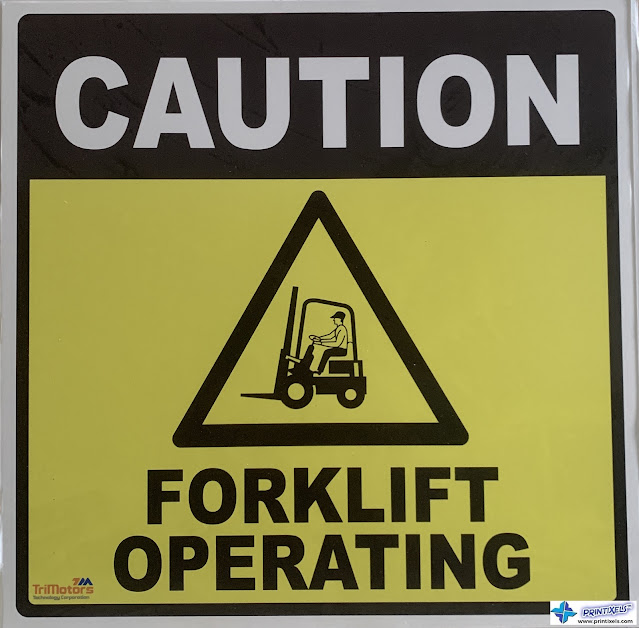
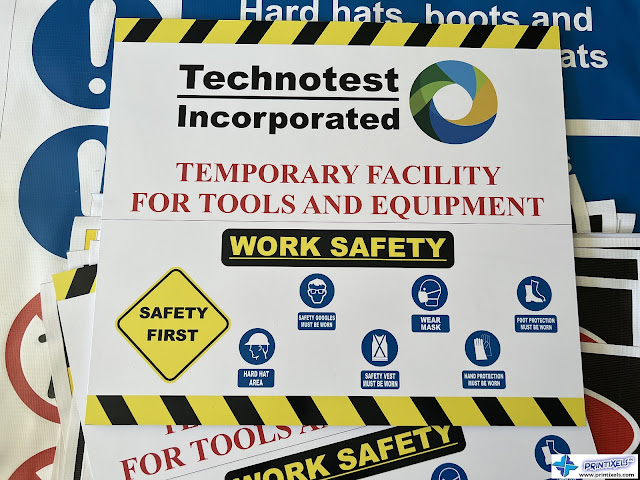
Governed by DOLE's Occupational Safety and Health Standards (OSHS), these signs are crucial for preventing accidents.Principle: Must be highly visible, durable, and universally understandable.
Specifics: OSHS guidelines specify minimum font sizes, color codes (e.g., red for danger, yellow for caution, green for safe condition), and symbol usage. While absolute dimensions aren't always prescribed for every single sign, the legibility distance and a minimum size to achieve this are implied. For example, a safety sign visible from 5 meters might require a letter height of at least 25mm.



Challenges and Nuances in Enforcement
Despite the existing frameworks, achieving universal adherence to signage size standards in the Philippines faces several challenges:
Weak Enforcement: While ordinances exist, consistent enforcement can be lax, leading to a proliferation of oversized or non-compliant signs, especially in rapidly developing areas.
Informal Economy: The vast informal sector often operates outside these regulations, contributing to visual clutter.
Technological Advancements: The rise of LED screens and digital billboards introduces new parameters for regulation, such as brightness, refresh rates, and static vs. dynamic content, which older ordinances may not adequately address.
Political Will: Enforcement often requires strong political will, especially when dealing with large advertising companies or influential businesses.
Conclusion
The "Standard Sizes of Signage in the Philippines" is not a monolithic concept but rather a dynamic interplay of national principles, localized ordinances, and industry best practices. While the DPWH provides more consistent standards for traffic signs, commercial signage sizes are largely dictated by the specific LGU, leading to a mosaic of regulations across the archipelago.
Urban Aesthetics and Visual Clutter: Unregulated signage can lead to visual chaos, diminishing the beauty and character of cities. Size limits contribute to a more organized and aesthetically pleasing environment.
Readability and Information Clarity: Signs must be appropriately sized for their viewing distance to effectively convey information. Standards ensure legibility without being overwhelmingly large or too small.
Fair Competition: Standard sizes can help level the playing field for businesses, preventing a "size war" where larger budgets dictate visual dominance.
Environmental Concerns: Larger signs often require more materials and energy, impacting environmental sustainability.
Disaster Resilience: In a country prone to typhoons, structural integrity and size limits prevent signs from becoming dangerous projectiles.
Key Regulatory Bodies and Laws
In the Philippines, the regulation of signage sizes is a shared responsibility, primarily between:Local Government Units (LGUs): Cities and municipalities, empowered by the Local Government Code of 1991 (Republic Act No. 7160), are the primary enforcers and creators of ordinances governing most commercial and building-mounted signs within their jurisdiction. These ordinances often include specific dimensions, setbacks, height limits, and even material specifications.
Department of Public Works and Highways (DPWH): For national roads and highways, the DPWH sets standards for traffic signs, warning signs, and directional signs, often adhering to international best practices like the Manual on Uniform Traffic Control Devices (MUTCD) principles.
Housing and Land Use Regulatory Board (HLURB), now Department of Human Settlements and Urban Development (DHSUD): While not directly setting sign sizes, their land use planning and zoning regulations indirectly influence permissible sign dimensions and locations.
Department of Labor and Employment (DOLE): For safety and warning signs within workplaces, specific Occupational Safety and Health Standards (OSHS) may dictate size, color, and placement for maximum visibility and effectiveness.
Types of Signage and Their Sizing Principles
Understanding the "standard sizes" in the Philippines requires breaking down signage into general categories:
1. Commercial and Business Signage (Building-Mounted, Freestanding, Billboards)
This category is largely governed by LGU ordinances, leading to variations from city to city. However, general principles and common maximums emerge:Building-Mounted Signs (Façade Signs):Principle: Often restricted as a percentage of the building's façade area where the business is located. Common limits range from 20% to 30% of the total wall area where the sign is installed.
Specifics: Some ordinances may specify a maximum height (e.g., not exceeding the parapet wall or roofline) or a maximum projection from the wall (e.g., 30cm to 60cm for blade signs). The letters and logos themselves must be proportionate to the sign area.
Freestanding Signs (Pylon Signs, Monument Signs):Principle: Regulated by height, setback from property lines, and sometimes total area.
Specifics: Height limits vary significantly based on zoning (commercial vs. residential, main thoroughfare vs. side street). Common maximums can range from 6 meters to 12 meters above ground level. Setbacks from property lines or road right-of-way are typically mandated (e.g., 3 to 6 meters), ensuring they don't obstruct sidewalks or traffic.
Billboards and Off-Premise Advertising Signs: This is the most heavily regulated and contentious category.Principle: Designed to control visual pollution, structural integrity, and public safety.
Specifics: While a uniform national standard for all billboards is elusive, there have been attempts. Many LGUs limit the display area of a single billboard face to 60 square meters (approx. 20ft x 30ft), with some stricter areas (e.g., Makati, certain heritage zones) imposing limits as low as 40 square meters.
Height: Max height limits are crucial, often ranging from 12 meters to 18 meters from ground level, depending on the LGU and whether it's a single or double-face billboard.
Number & Spacing: Ordinances also regulate the minimum clear distance between billboards (e.g., 50 to 100 meters) and the maximum number of faces allowed on a single structure. The Metro Manila Development Authority (MMDA) has issued regulations, like Ordinance No. 2009-009, attempting to harmonize these, but enforcement and varying LGU interpretations remain challenges.
2. Traffic and Road Signage (DPWH Standards)
These signs adhere to more uniform standards, often drawing from international conventions to ensure clarity and immediate recognition for drivers. While specific dimensions vary based on the type of sign and its intended viewing distance, the principles are consistent across the country for national roads.Types: Regulatory signs (e.g., "STOP," "NO PARKING"), Warning Signs (e.g., "Sharp Curve," "Pedestrian Crossing"), Guide/Informational Signs (e.g., "Directional arrows," "Town names").
Principle: Size is determined by legibility requirements at varying speeds and distances. Larger signs are used on expressways, while smaller ones suffice on local streets.
Standards: The DPWH Manual on Uniform Traffic Control Devices (MUTCD) for the Philippines provides detailed specifications for shapes (e.g., octagon for stop, triangle for yield, diamond for warning), colors (e.g., red for stop/prohibitive, yellow for warning, green for directional), symbols, fonts, and minimum sizes for various applications. For instance, a typical "STOP" sign usually has an edge-to-edge dimension of 750mm (30 inches) for standard roads, increasing for higher speed roads.
3. Public and Government Signage
This includes signs for public buildings, parks, evacuation centers, or historical markers. While less stringently standardized by national law for their dimensions, they generally follow principles of:Readability and Accessibility: Sizes are chosen to be easily readable by pedestrians and visitors.
Proportionality: They are sized to be proportionate to the structure or area they refer to.
Consistency: Government agencies often implement internal guidelines for consistent branding and information dissemination across their facilities.
4. Safety and Warning Signage (Workplace)
Governed by DOLE's Occupational Safety and Health Standards (OSHS), these signs are crucial for preventing accidents.Principle: Must be highly visible, durable, and universally understandable.
Specifics: OSHS guidelines specify minimum font sizes, color codes (e.g., red for danger, yellow for caution, green for safe condition), and symbol usage. While absolute dimensions aren't always prescribed for every single sign, the legibility distance and a minimum size to achieve this are implied. For example, a safety sign visible from 5 meters might require a letter height of at least 25mm.
Challenges and Nuances in Enforcement
Despite the existing frameworks, achieving universal adherence to signage size standards in the Philippines faces several challenges:
LGU Discrepancies: The primary challenge is the lack of a single, unified national code for all commercial signage. What's permissible in Quezon City might differ significantly from Makati or Cebu City. This creates confusion for businesses operating across multiple jurisdictions.
Weak Enforcement: While ordinances exist, consistent enforcement can be lax, leading to a proliferation of oversized or non-compliant signs, especially in rapidly developing areas.
Informal Economy: The vast informal sector often operates outside these regulations, contributing to visual clutter.
Technological Advancements: The rise of LED screens and digital billboards introduces new parameters for regulation, such as brightness, refresh rates, and static vs. dynamic content, which older ordinances may not adequately address.
Political Will: Enforcement often requires strong political will, especially when dealing with large advertising companies or influential businesses.
Conclusion
The "Standard Sizes of Signage in the Philippines" is not a monolithic concept but rather a dynamic interplay of national principles, localized ordinances, and industry best practices. While the DPWH provides more consistent standards for traffic signs, commercial signage sizes are largely dictated by the specific LGU, leading to a mosaic of regulations across the archipelago.
The ongoing effort to standardize aims to balance commercial interests with the imperative for public safety, urban aesthetics, and environmental responsibility, moving towards a more orderly and visually harmonious Philippine urban landscape. Continued dialogue between national agencies, LGUs, businesses, and the public is vital to refine and robustly implement these crucial standards.
Related Product:


0 Comments:
Post a Comment