Common Luminous Safety Signs & Their Functions

Printixels Enterprise
Common Luminous Safety Signs & Their Functions

In the Philippines, the presence of luminous safety signs is mandated by a blend of international standards and local regulations. 

These signs are required to be self‑luminous (photoluminescent) or electrically powered LED so that they remain visible during power outages, smoke‑filled environments, or any situation where ordinary lighting fails. 

Their primary purpose is to convey critical information instantly, guiding occupants toward safety and preventing accidents when every second counts.

1. Exit and Egress Signs

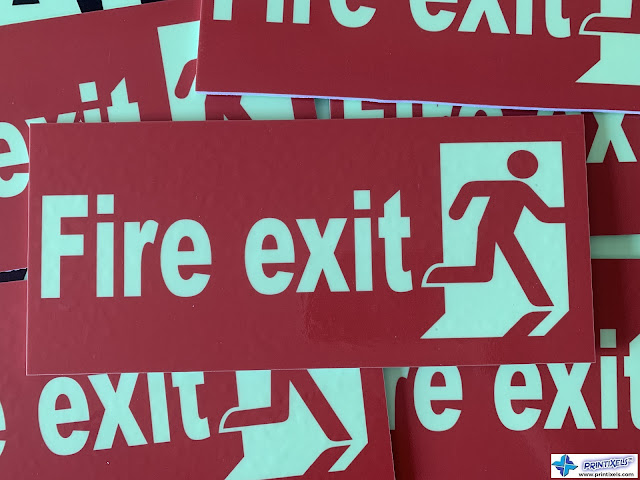
Exit signs, usually rectangular with a green “EXIT” or an arrow, are the most ubiquitous luminous signs. In the Philippines they must meet the “Photoluminescent Signage Standard” (DOLE‑DO 13‑A, Section 10), which requires a minimum luminance of 4 candela per square meter after 15 minutes of darkness. These signs indicate the nearest egress route, stairwell, or escape tunnel, helping evacuees navigate safely even when fire, smoke, or a total loss of power obscures normal lighting.

2. Fire‑Related Signs

Fire‑Extinguisher and Hose‑Reel Signs: Typically orange or red, these symbols locate firefighting equipment. Their luminous coating ensures that firefighters and building occupants can quickly locate extinguishers or hose reels under adverse conditions.

Fire‑Alarm Activation Signs: Blue or white symbols with “FIRE ALARM” alerts users where to manually trigger an alarm, a critical step in early fire detection.

No‑Smoking Signs: Often placed near high‑risk zones, these luminous signs reinforce fire‑prevention policies, especially in industrial plants, warehouses, and public transport terminals.


3. Hazard and Prohibition Signs

Photoluminescent hazard signs—such as “DANGER HIGH VOLTAGE,” “BIOHAZARD,” or “RADIATION AREA”—use bold colors (yellow, red, black) combined with white pictograms to warn of specific dangers. Their glow‑in‑the‑dark capability alerts workers and visitors during night shifts or emergencies, reducing the likelihood of inadvertent exposure.

4. First‑Aid and Medical Facility Signs

Green luminous signs identifying first‑aid stations, automated external defibrillators (AEDs), or medical rooms help responders locate life‑saving equipment quickly. In a country where natural calamities like typhoons can cause widespread power loss, the continuous visibility of these signs can be the difference between a timely rescue and a missed opportunity.

5. Directional and Instructional Signs

Beyond exits, luminous directional signs—arrow‑based way‑finding panels—guide occupants toward assembly points, emergency shelters, or evacuation buses. Instructional signs such as “STAY LOW, CRAWL” in smoke‑filled areas or “USE STAIRCASE, NOT ELEVATOR” are also required to be self‑luminous in high‑rise residential and commercial buildings.

Functionality and Maintenance in the Filipino Context

Because the Philippines experiences frequent power interruptions and tropical humidity, photoluminescent signs (made from zinc sulfide or strontium aluminate compounds) are favored for their long‑lasting charge‑retention—up to 12 hours after a 10‑minute exposure to bright light. 

For high‑traffic areas, LED‑backlit signs with battery backups are installed, conforming to the Philippine Electrical Code (PEC) Section 9.5 which stipulates a minimum of 90 minutes of autonomous operation. Regular inspection—at least quarterly, as stipulated by DOLE—ensures that the luminous coating has not faded and that batteries are replaced before their expected service life.

Bottom Line

Luminous safety signs are more than decorative fixtures; they are indispensable components of the Philippines’ emergency‑preparedness infrastructure. By adhering to local standards and ensuring routine maintenance, these signs provide a reliable visual cue that directs people to safety, minimizes exposure to hazards, and ultimately saves lives—especially when darkness or chaos would otherwise render ordinary signage useless.

Related Product:
Safety Signs

Finding Good Deals on Roll-Up Banners in the Philippines

Printixels Enterprise
Finding Good Deals on Roll-Up Banners in the Philippines

Roll-up banners are a staple for events, product launches, and business promotions in the Philippines, offering an eye-catching way to display branding. 

While traditional advertising agencies often sell these, savvy buyers know there are other avenues to secure quality banners at competitive prices. If you’re on the hunt for cost-effective solutions, here are several places to explore.

Online Marketplaces: Convenience at Your Fingertips

Local e-commerce giants like Shopee and Lazada are treasure troves for promotional materials. These platforms host numerous verified sellers offering a range of roll-up banners, often at discounted rates due to bulk seller promotions or flash sales. Searching by price range, reviews, and seller ratings can help filter out low-quality options. 

Additionally, Facebook Marketplace and Carousell provide opportunities to connect with local vendors or even buy secondhand banners in good condition.

Local Printing and Advertising Shops: A Personalized Touch

Metro Manila’s business hubs, such as Makati, Bonifacio Global City (BGC), and Ortigas, are home to dozens of printing and advertising shops. Many of these businesses offer custom roll-up banners at lower rates when negotiating directly. 

For example, some suppliers often have bundled deals for clients placing multiple orders. Smaller towns may also have local print shops with competitive pricing. Always request samples to assess quality before committing.

Roll Up Standees Philippines Roll Up Standees Philippines

Bulk Orders and Manufacturer Partnerships

Businesses or organizations with large-scale needs can save significantly by ordering in bulk. Contacting manufacturers directly, such as those listed on the Philippine Marketing Association directory, can unlock wholesale discounts. Some companies specialize in bulk production and may offer lower per-unit costs by skipping middlemen. Additionally, some manufacturers in Mandaue City or Makati’s Mactan-Cebu area provide free delivery for large orders.

Specialized Promotional Product Hubs

Specialty malls like PowerHouse MegaMall in Alabang or Tomas Morato Commercial Complex in Quezon City cater to event planners and advertisers. These hubs house multiple vendors under one roof, fostering competition that often drives down prices. 

Weekday visits or seasonal events—like end-of-year sales—can yield further discounts. For instance, some hubs in these areas frequently run promotions during months like December or January.

Seasonal Sales and Trade Shows

Roll-up banners are often discounted around holiday seasons, sales periods like “9/9” or “12/12” (similar to Black Friday), or during trade shows. Events such as the Philippine International Printing and Packaging Show in SMX Convention Center offer exclusive deals on promotional materials. Subscribing to newsletters from shops like PrintDirect or OnlinePrinting.com.ph can alert you to limited-time offers.

Final Tips: Quality vs. Price


While cost is important, prioritize quality to ensure tarpaulin banners withstand regular use and outdoor exposure. Always compare material options (e.g., polyester bases with UV protection) and check delivery timelines. Engage with sellers through messaging tools on e-commerce platforms to negotiate prices or request custom designs.

In a market as dynamic as the Philippines, there’s no shortage of options for sourcing cost-effective roll-up banners. By leveraging online platforms, local shops, and strategic partnerships, you can enhance your visibility without breaking the bank. Start shopping around today to turn your promotional vision into reality.

Related Product:
 Roll Up / Pull Up Banner Stand With Tarpaulin

Maritime / IMO Safety Signages: Why They Matter

Printixels Enterprise
Maritime / IMO Safety Signages: Why They Matter

The Philippines depends on maritime activities for commerce, tourism, fishing, and national security. Every ship that sails its waters—whether a bulk carrier, a passenger ferry, a fishing vessel, or an offshore platform—must comply with the International Maritime Organization’s (IMO) system of safety signs.

These standardized symbols, colours and pictograms are codified in IMO conventions such as SOLAS (Safety of Life at Sea), the International Convention on the Standards of Training, Certification and Watchkeeping for Seafarers (STCW), and MARPOL (Marine Pollution). By providing a universal visual language that transcends language barriers, IMO safety signs convey critical information about fire‑fighting equipment, emergency exits, life‑saving appliances, hazardous substances, and environmental protection measures. 

For a country like the Philippines, where crew members and passengers often speak a mix of Tagalog, English, Visayan, and other local dialects, the consistency of these signs can mean the difference between a swift, orderly evacuation and a tragic loss of life.

In the Philippine context, the Maritime Industry Authority (MARINA) and the Philippine Coast Guard (PCG) enforce the adoption of IMO sign standards on all vessels flying the Philippine flag, as well as on foreign ships calling at Philippine ports. The signs must be placed at prescribed heights, illuminated or retro‑reflective for night visibility, and maintained in good condition. 

Local regulations also require that the meaning of each sign be included in shipboard safety briefings and in the orientation of port workers, ensuring that the visual cue is reinforced by verbal instruction. In practice, this means that a red “Fire Hazard – Keep Clear” sign on the deck of a ferry, a green “Life‑Saving Appliance – Lifeboat” sign near the muster station, and a blue “Environmental Protection – No Discharge” sign on tankers are not merely decorative; they are legally binding safety controls that are routinely inspected during vessel certification and port state control checks.

IMO Safety Signs Philippines Glow in the Dark IMO Safety Signs Philippines

The importance of these maritime signs becomes especially evident during emergencies that have historically plagued the Philippine maritime sector—overcrowded ferries, sudden typhoons, and oil spills in ecologically sensitive waters such as the Verde Island Passage. 

Clear, legible signage guides crew and passengers to muster stations, identifies the location of fire extinguishers and emergency shut‑off valves, and alerts workers to areas where hazardous chemicals are stored. When a fire breaks out on a cargo ship, the red “Fire Extinguishers” sign directs responders to the nearest equipment, reducing response time and limiting damage. In the event of a spill, the blue “No Discharge” sign reminds crew to activate containment procedures, protecting coral reefs and fisheries that provide livelihoods for millions of Filipinos.

Beyond immediate safety, IMO signs support the Philippines’ broader goals of sustainable maritime development and compliance with global trade standards. By adhering to the internationally recognised visual language, Philippine ports and vessels gain credibility with foreign partners, facilitating smoother customs clearance, insurance underwriting, and chartering. Moreover, the consistent use of safety signage reinforces a safety culture among seafarers, encouraging routine inspections, proper maintenance of lifesaving gear, and ongoing training—key components of the STCW’s competency framework.

In short, maritime and IMO safety signs are not optional adornments; they are essential tools that protect lives, preserve the marine environment, and uphold the Philippines’ reputation as a responsible maritime nation. Their proper design, installation, and regular reinforcement through training are fundamental to ensuring that every voyage—whether a short inter‑island ferry ride or a long‑haul cargo trip—concludes safely and responsibly.

Related Product:
Marine & IMO Safety Signs Philippines